


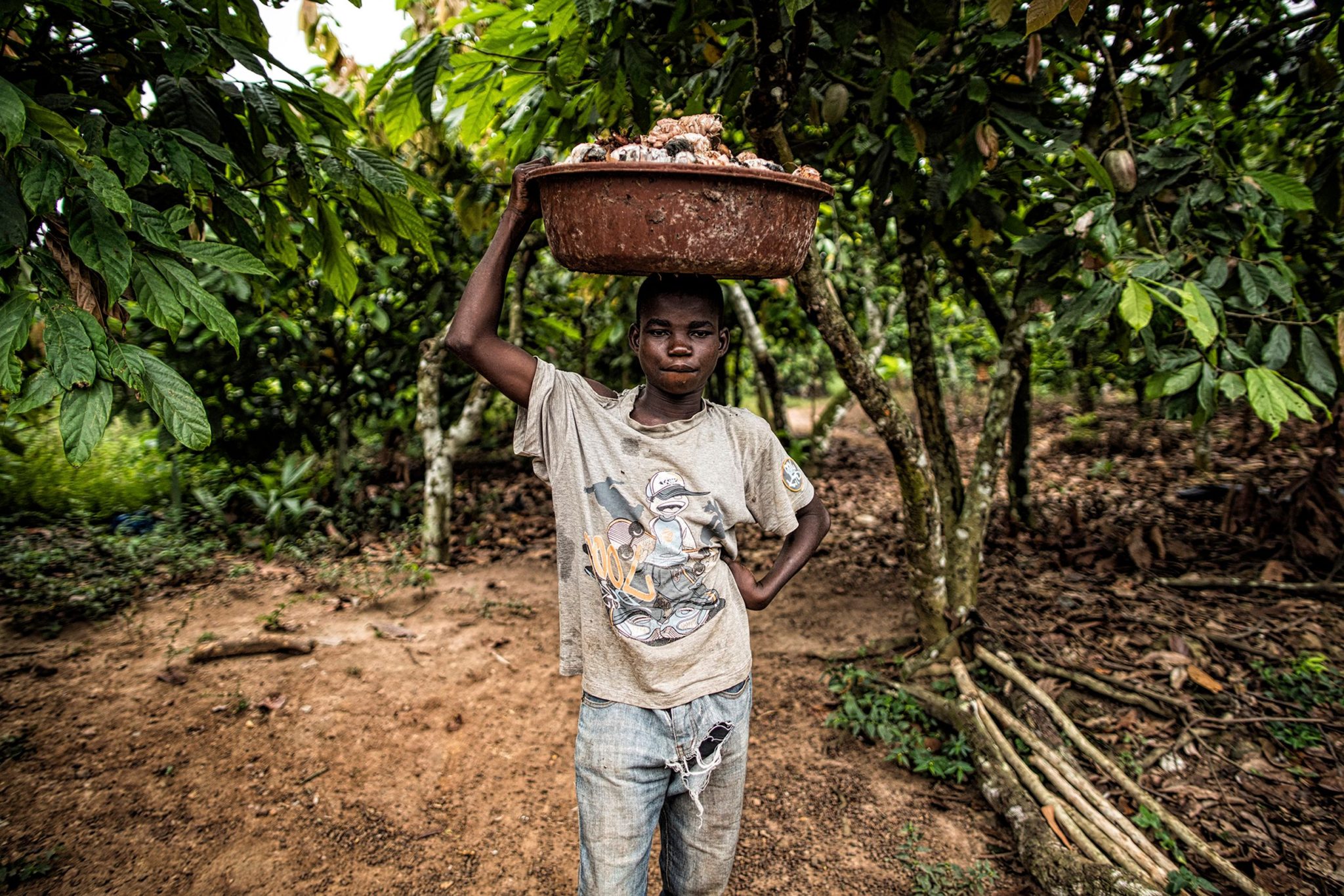
What is Child Labour?
Child labour is defined by the International Labour Organisation (ILO) as “work that deprives children (below 18 years) of their childhood, their potential and their dignity, and which is harmful to their physical and mental development.” The World Day Against Child Labour is an initiative launched on June 12, 2002, by ILO the United Nations body to regulate the world of work by bringing together governments, local authorities, and international human rights organizations to draw attention on the global extent of child labour and to take necessary steps to eliminate it. This year the theme and focus of World Day Against Child Labour 2020 is ‘the impact of COVID-19 crisis on child labour’. Due to the ongoing coronavirus pandemic, it will be conducted as a virtual campaign organized jointly with the Global March Against Child Labour (movement by Nobel Peace Prize winner Kailash Satyarthi) and the International Partnership for Cooperation on Child Labour in Agriculture (IPCCLA). Currently, there are more than 200 million child labourers of which an estimated 120 million are engaged in hazardous work.

Worldwide statistics on Child Labor
- 73 million child labourers are less than 10 years.
- The highest number of child labourers is in sub-Saharan Africa.
- In 2019, 19 million children were displaced from their homes due to conflict and violence in their country.
- Child labour is mostly used in farms that produce cocoa, coffee, cotton and rubber.
- Approximately 20 million children are employed in garment manufacturing, carpet weaving, toy making, matchstick and firecracker assembly, and hand-rolling cigarette/cigars.
- 1 out of 4 children is a victim of child trafficking (approximately 1.2 million) who gets forced into child labour every year.
- 2020 to date, 531,570 children have been sold as slaves. In Ghana, for even as low as USD 37.
(Data Source: The World Counts)
Region-wise Child Labour prevalence
The 2016 Global Estimates of Child Labour by ILO indicate the highest number of children aged 5 to 17 engaged in child labour were to be found in: –
- Africa (72.1 million)
- Asia and the Pacific (62 million)
- America (10.7 million)
- Europe and Central Asia (5.5 million)
- Middle East (1.2 million)
The International Laws governing Child Labor
Some of the international laws governing child labor are –
- The International Convention on the Rights of the Child (ICRC)
- The Universal Declaration of Human Rights (UDHR)
- The ILO Minimum Age Convention (No. 138)
- The Ruggie Principles or the UN Guiding Principles for Business and Human Rights
- The OECD guidelines
- ILO Worst Forms of Child Labor Convention (No. 182)
- UK Modern Slavery Act
- California Transparency in Supply Chains Act
- Tariff Act of 1930 (US)
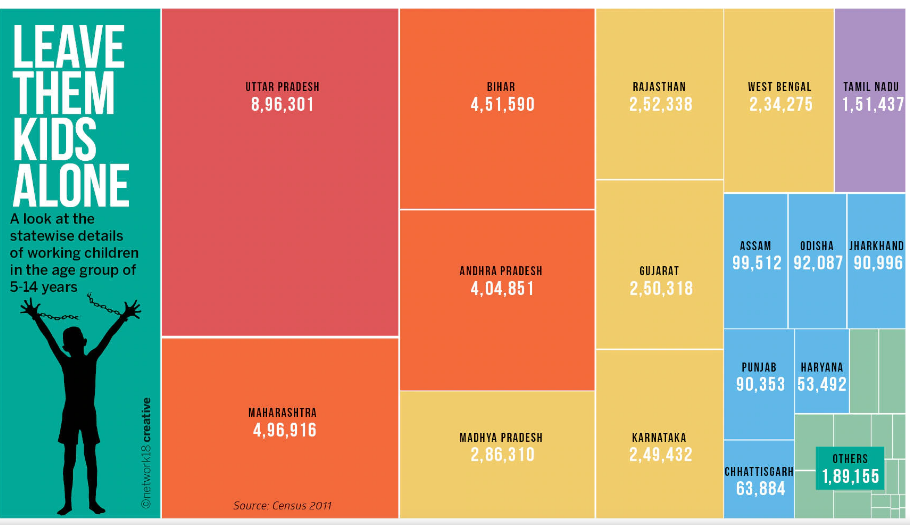
Child Labour in India
The Constitution of India in the Fundamental Rights and the Directive Principles of State Policy prohibits child labour below the age of 14 years in any factory or mine or castle or engaged in any other hazardous employment (Article 24). It is a cognizable criminal offence to employ a Child for any work. The Constitution further includes provisions “for the right of children to free and compulsory education,” the prohibition of “traffic in human being ‘beggar’ and other similar forms of forced labour,” and the prohibition of employment of children in hazardous employment.”
Yet, 33 million children in India continue to be employed in various forms of child labour. Of these, the five states which contribute to India’s biggest child labour employers are Bihar, Uttar Pradesh, Rajasthan, Madhya Pradesh and Maharashtra (as per Save the Children NGO). While Delhi alone is responsible for 1 million child labour.
Indian laws on child labour include:
- The Indian Penal Code, 1860
- The Bonded Labour System (Abolition) Act, 1976
- Child Labour (Prohibition and Regulation) Act, 1986
- Right to Education Act (RTE), 2009.
- Child labour (Prohibition and Prevention) Amendment Act, 2016, and
- Juvenile Justice (Care and Protection) Act, 2000.
In spite of the government and NGOs working closely to monitor child labour, it continues to exist in India mainly because of factors like acute poverty, social conditioning where girl child requires to work and not attend school, lack of work opportunities for adults, and migration.
Indian children are found working agriculture, service industry especially in restaurants and roadside food/tea stalls, in carpet weaving, in brick kilns, in garment making, and as domestic help. They are also a victim of the pornography industry and used in illicit activities like drug trafficking.
How to reduce Child Labor
Knowing almost one out of every ten children worldwide are forced in child labour, it is time to contribute in a small way to discourage the practice. In recent years, awareness among people has greatly helped to reduce child labour by 94 million since 2000. However, the world is working towards putting an end to child labour. Target 8.7 of the UN Sustainable Development Goals calls for an end to child labour in all its forms by 2025. How can the world community get firmly on track toward eliminating child labour?
Between 2000 and 2012 the numbers fell from 245 million to 168 million.
Some of the ways by which we all can contribute to reducing child labour are,
- Buy products earmarked ‘A Fair Trade Product’ that signifies there was no child employed in the process of manufacturing the product.
- Check for Labels like “Rugmark” on a carpet which signifies that the carpet was not made by children.
- Source items from retail stores, manufacturers, and importers who can give you an assurance that they do not use child labour.
- Try to buy ‘sweatshop-free products’ if possible.
- Contact local authorities or NGOs as soon as you come across a child being forcefully held to work.
How will COVID-19 affect Child Labour?
The COVID-19 health pandemic has not just caused an economic slowdown worldwide but can directly increase the prevalence of Child labour. Here’s how it could play out –
– Limited access to health services, food, and education services for children around the globe.
– Temporary closure of schools may result in pressure for children to go out and work.
– Due to a growing risk of infection in adults, children might need to go and take up their jobs especially in the fields. Today 71% of child labour is employed in agriculture fields which means working longer hours in the hot sun.
– Chronic health issues leading to parental disabilities may result in children taking up additional responsibility and begin to work at an early age.
– Loss of jobs resulting in a negative impact on people’s livelihoods might unsuspectingly, push millions of vulnerable children from these families into child labour to support the family income.
– Parental mortality due to COVID-19 will force children to work.
– Children of self-employed migrant workers more vulnerable to adverse market outcomes.
– COVID-19 causes further damage to the economically backward. Many of the older children may be forced to drop out of school to support younger siblings.
– Heightened poverty on account of the coronavirus situation makes the girl child in a country like India more vulnerable.
– Less percentage of profits might result in employers using cheaper child labour to reduce the manufacturing cost.
– Reopening factories/service sectors with a limited workforce may involve child workers living in poor conditions on site to put in longer hours.
The saddest images are of migrant workers in India finding their way back to their villages on account of the loss of jobs and high rents in cities. COVID-19 has some real heart-wrenching stories. One such is of Krishna Sahu (45), who worked as a construction worker, set off on May 9, 2020, on a 750-km bicycle journey from Lucknow to his home in Bemetra district in Chhattisgarh with wife Pramila Sahu (38), and their children Chandni (3) and Nikhil (1). By the time they covered 25 kms they were hit by an unidentified speeding vehicle at 2.30 am. Both the mother and father died leaving two children with only their fates behind. The uncle of the poverty-ridden family has for now accepted the children but will they be put up for adoption, or will they be safe from exploitation and child labour…it remains to be seen.
Conclusion
Though the UN General Assembly has declared 2021 as the Year for the Elimination of Child Labour and is making efforts to eradicate child labour, it is not going to be any ordinary task. The question here is, in poor countries if children do not work, what will they eat? As conscious grownups it time to address this issue backed with knowledge and yet fuelled by empathy. We hope this article is an eye-opener to a colossal problem the world is facing. Let’s contribute in our own small way to better the lives of the next generations.